Book & Movie: Project Hail Mary
No spoilers ahead. Just my thoughts on the book and the movie.
My lifelong science buddy Anu recommended the book Project Hail Mary by Andy Weir. We talk about science and astronomy a lot, he knows my taste well, and he strongly insisted that I read it. He also told me the book was being adapted into a movie, and he had a few conditions:
- Read the book first, then watch the movie.
- Do not watch the trailer before the movie.
- Do not read any reviews before the movie.
- Do not even look at any photos or posters before the movie.
That was a lot of conditions. But I agreed to all of them, and I am glad I did.
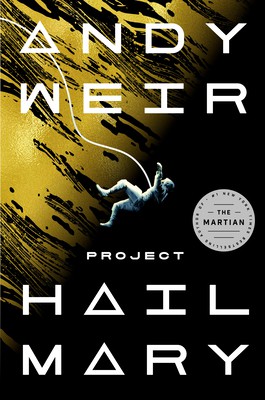
Since the movie was releasing on March 19 in my area, I wanted to finish the book without spoilers. So I bought a copy in advance and started reading.
The movie released when I was about halfway through the book, but I still did not want to spoil the experience. So I kept reading. Reading the book while knowing the movie was already running in theatres is a different experience.
The book was a very good read. As soon as I finished it, I booked an IMAX ticket.
This post is about the experience of reading the book and watching the movie. I am keeping this intentionally short and spoiler-free.
No-spoiler synopsis: The story is the first-person narrative of Ryland Grace, a scientist who wakes up alone in a spaceship. The book progresses through two different timelines.
Reading Project Hail Mary
The book is a great reading experience. It moves with a gripping narrative, well-placed cliffhangers, believable science details, good humor, and emotional dilemmas.
Here's my list of what I liked about the book:
Great science detailing
The protagonist is a science teacher, and his rational thinking and problem-solving stand out throughout the book. Whenever he faces a problem, he breaks it down step by step and uses his science knowledge to work toward a solution.
The science explanations also feel convincing and logical. Nothing is left as "it just works somehow". That makes the reading experience smooth, even when the book gets technical.
Loneliness and Dilemmas
In the main timeline, the protagonist is completely alone (note, Andy Weir wrote The Martian) and the book makes you feel that weight. The other timeline is full of people, friendships, and workplace interactions. Moving between those two timelines makes his loneliness land even harder.
There are also several moral dilemmas. The one near the end of the book is especially memorable. That one is written so well that it puts the reader in that situation before revealing the protagonist's choice, allowing the reader to think through it for a while (and make a choice). Very well done.
Watching Project Hail Mary
Anu had already watched the movie, and he gave me a good idea of what to expect. In his words, "the movie is like the 30-minute highlights of a day-long cricket match."
He was right.
The movie rushes through the early parts of the book and skips most of the science detail. I was quite disappointed in the first 10 to 15 minutes, but that choice made more sense once the movie shifted toward the main plot. That part is more relatable and more engaging for a general audience than long science explanations. The emotional moments were well done.
The book has a more serious tone with some humor, while the movie leans much more into humor than science. Again, that feels like a choice made for a wider audience.
Since I never watched the trailer before reading the book, I had built a whole version of this world in my head. What I saw in the movie was very different, but it was fun to watch a completely different version of my imaginary world. But there's a breathtakingly stunning visual of a very specific EVA session in the movie. It is a thousand times better than my imaginary version, especially watching on the IMAX screen.
The movie is a good watch. It is well made and clearly aimed at a general audience rather than a science-heavy one.
If you ask me whether I liked the movie or the book more, I would pick the book (except for the EVA scene) because of the extra detailing and the dopamine hit from the imaginary world that I built while reading it.